Saturday, October 24, 2009

Bob le Flambeur


This 1956 French crime drama by Jean-Pierre Melville was his big breakthrough. It tells the story of Bob, a sort of elder statesman of the Paris crime world. Everyone likes him, even the police, but he's begun to live a pretty boring life as a expert for the police. Problem is, this means fellow criminals don't trust him and the police are always watching. His itch for adventure leads him to a plan to rob a casino. All he needs now is a plan and a team. It's classic. It may not have been the first of it's kind, but it unified a distinct style approach that influenced pretty much all movies of it's kind to follow. This and Kubrick's The Killing are basically the parents of every heist movie to follow. They may not know it now, but movies like Ocean's 11 and the Bond movies are direct descendants. Now, that doesn't mean that your liking those movies means you will like this one. Whether or not you like Bob depends on how you approach it. The acting is pretty poor and the story is really not that great. Melville also loves to keep a pretty darn slow pace. What makes it worth a watch is the style. His visuals and approach are just classic. If you like the heist genre, it's worth your time, like a blues guitarist listening to early blues recordings. Know what I mean? Seeing where what you love comes from.

Saturday Afternoon.

Sin Nombre


This 2009 Mexican drama by Cary Fukunaga follows two stories that intersect because their stories are not only headed to the same place, but are, in reality, the same story. One is that of a Guatemalan young man who goes by Casper and is a member of MS13, the nasty gang that stretches from California through all of Mexico and Central America. He is beginning to doubt his ways, but only in harmless ways, that is until something awful happens, at which point his doubts become a straight up drive to escape. He sees the possibility on a train that runs from south of Honduras clear to Texas. Problem is, the train ride itself may well be more dangerous than his life in Guatemala. But the train, has a defined end, his life, outside of death, doesn't really. The other story is that of a good, but very poor, Honduran girl, who was abandoned by her father 14 years ago. The movie picks up with her father showing up out of the blue, begging for her to come with him back to his home in New Jersey. Problem is, he's also pretty damn poor and spent just about all his money getting back to her. His solution, take that same train. This movie is really about the present state of things in our little Western world.This idea that one always has a choice, each individual shapes his or her life by their choices. This doesn't mean they are easy one's or that what we think will lead to betterment will actually do so, but it's our choice to make. It's also a movie about the quest for autonomy. We want more choices, more options. I don't mean this in a selfish way, sometimes, I can only imagine, it feels like we must seek more autonomy. What I mean is that there is something imbedded in our Western way of doing things that makes so many feel like there is always a better option out there. In the case of some characters in this flick, the grass on the other side was decidedly worse and they never should've made the decision to leave, but for others in the film, deciding to leave was likely the best decision they'd ever make. The point is, catching that train, heading out of town, to another place, another country, is indicative of our Western way and the results vary widely. Fukunaga spent two years in Mexico and Central America living with members of MS13, traveling on the very train line from the movie and trying to come to an understanding of those willing to take such risks, to go so far. He also shot the movie down there, on that train and cast many unknowns and non-professionals. It shows. The movie feels genuine, it feels truly informed. It's like, not only are you really seeing it, but you're experiencing it. The stories are engaging, the performances fantastic and the maverick style of shooting it makes the visuals very interesting. See this movie, even if you're not a subtitles kind of person.

Worth Watching.

Moon


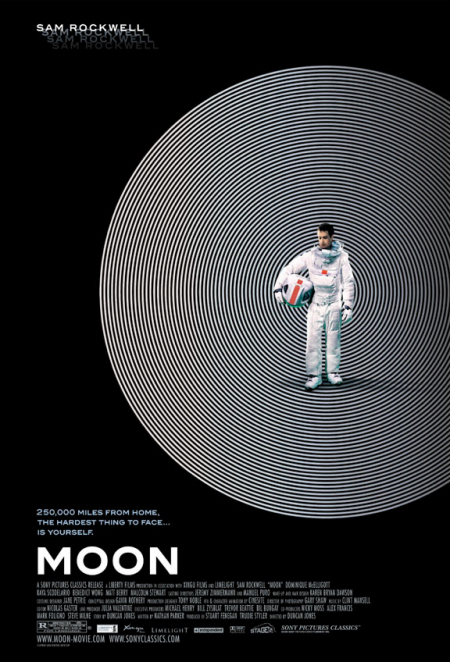
Recently my parents were in town and we were headed to see Couples Retreat. I really didn't want to and joked that we ought to instead go see Moon. The reason this is a joke is because it appeared like these movies couldn't be more dissimilar. One is a big budget, vastly distributed and marketed, please-all comedy full of big stars. The other is a low budget, barely distributed, almost unheard of dramatic sci-fi movie starring...one person, Sam Rockwell. We arrive at the giant megaplex where couples retreat was playing and find that there are only a few seats left and they were practically buttressed against the screen itself. So, I brought up Moon again. We end up seeing Moon at one of my favorite movie houses in Portland, a place called Livingroom Theater, where it's never crowded, the seats are plush and have ottomans and waiters come in and serve you cold beer and good food on real plates, set with real silverware. Well, I'm pretty sure I can guess what Couples Retreat was like, but I was shocked by Moon. It was fantastic. Truly. Even my parents loved it, we all did. I say all this to point out the funny thing about movies and how they are marketed. One is clearly a better movie watching experience, yet most of the people who will ever read this review will never see it. The other is inferior and, even though we all know it won't have any surprises and very few memorable moments, most of us will most likely see it. Odd. Well, consider this my plea to skip the megaplex, find Moon and see it. This movie is sci-fi, but in the old school sense. In other words, it's quiet and tense, instead of action-packed and overbrimming with special effects. Moon may be low budget, but it's absolutely beautiful. Clearly every penny was well spent and in the hands of artists who knew how to use them. The acting is good too, but not over the top. Rockwell's performance was just natural, it seemed like he simply was who he was. And the story was great. Here's the basic story to get you interested, but, unfortunately, I can't tell you more without lessening the experience for you. A few decades from now America's discovered that the minerals of the moon are fuel rich, so, of course, we've begun harvesting them. Sound crazy? Well, don't think that, Bush actually proposed this in a speech about 6 years ago. Anyway, machines do the majority of the work, but someone has to be there to do repairs when needed and to send the fuel canisters back to Earth once they're full. But the moon is hostile and very very far away, so one person goes there and stays there for several years per stretch, when his or her replacement comes for a sort of shift change. Moon picks up during the last two weeks of Sam Bell's stint and, well, he's kind of losing it. Just when he thinks he's not going to crack, that he's going to make it out just fine, things get really really weird. See this movie. It is tense, interesting and never stalls for even a second, despite the fact that it's only one person on the screen for like 98% of the movie. This is a rare one and shouldn't be missed.

BA

Saturday, September 12, 2009

Tuesday, September 8, 2009

Lessons of Darkness

In 1992 Werner Herzog took a small crew to Kuwait after the first Iraq war was over and after Iraq evacuated, leaving a wake of destruction in their path. Herzog is famous for his garrulous narration in his documentaries, but the reality he discovered upon arrival was so visually compelling the vast majority of this doc contains no narration at all. In fact, all he does is play pieces by composers like Mahler and feeds the viewer a steady diet of desolate landscape after desolate landscape, with almost no dialogue or text. What this means is the flick is interesting and at times quite moving, but overall it’s not something that’s going to keep you gripped to your seat. Then, out of nowhere, it ends. I watched it with friends and half the room said, in unison, “It’s over?!” The movie comes in at about 45 minutes too. Very odd. Herzog seems to have endless amounts to say about the true nature of subjects that seem, on the surface, to be fairly transparent. I thought, going in, that he could fill this flick, about such a rich subject as the Iraq situation, with hours upon hours of commentary and engaging subtext, but in reality the movie is little more than a montage of interesting, albeit occasionally repetitive, imagery. It’s worth a watch, in that you’ll see aspects of the war that are rarely shown and images you’ve likely not seen before, and since it’s not very long at all, it’s not like it’s hard to make it through. That said, it’s hardly at the top of Herzog’s library of films, so if you’re aiming to see most of what he’s done, it’s worth it, but if you’re new to his work and wanting only a good taste, see Grizzly Man, Little Dieter Needs to Fly or My Best Fiend and skip this one.

Saturday Afternoon

Monday, September 7, 2009

Inglourious Basterds


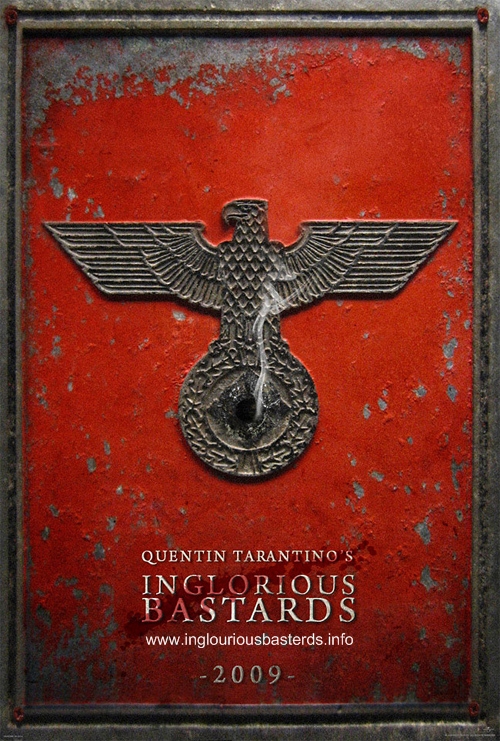
This 2009 flick and latest addition from writer/director Quentin Tarantino offers a very unique take on the WWII movie genre. Hell, all I really have to tell you is that it's a historical war drama by Tarantino for you to know that. He started out years ago wanting to do a remake of the 1978 flick by Enzo Castellari, but, he says, one day he learned that one of his favorite directors of all time (and mine I must say), Sergio Leone, was working on a WWII movie when he died. Leone's movies are tense, violent and full of bad dudes kicking a fistful of ass. Tarantino says that this sparked an idea in his head like a lightning bolt. What if he made a Leone style, western inspired, WWII movie where the jews clean house the way Clint Eastwood's characters so often did in any given Leone pic? Well, that's just what he's done. Like any good Tarantino movie, this flick is about way more than that. There are subplots and side stories galore and each one feels full and rich and perfectly necessary for the story and the overall tone. He teams up again with production designer David Wasco and cinematographer Robert Richardson, which means every last detail of every single last shot is crisp and telling and totally fantastic. The scenes and the pacing are Tarantino at his best. This movie is simply fantastic. The Leone pic he said he drew the most inspiration from was Once Upon a Time in the West, which just so happens to be my favorite. He even starts the movie with the words Once Upon a Time in Nazi Occupied France. What this means is that Tarantino takes his time and the movie feels like a slow, deliberate boil. But, trust me, when it boils, it boils. The best thing about it all are the performances. Tarantino, as usual, casts based on how they are for the part and not whether or not they're respected actors, or even actors for that matter, there are members of the primary cast who are models, directors, even musicians, but every last person from the projectionist to the lead roles are emotionally gripping, authentic and really great. In fact, there are people in this movie who don't even have speaking roles that I can't get out of my head a day later. There are those who are in one brief scene and yet are memorable and evocative. From this sea of great performances rises three that are remarkable. First, there is the villainous and bizarre Col Hans Landa, played to perfection by Austrian TV actor Christoph Waltz. Every last detail of his presence on screen is captivating and terrifying. I was glued. Then there's his counterpart, Brad Pitt's heroic and cruel Lt Aldo Raine. Raine is an utterly unique character straight out the smoky mountains who, in the first moment you see him, says he's here to do one thing and nothing else, kill Nazi's. They call him Aldo the Apache because he doesn't just kill them, he desecrates their bodied and works real hard to make Germany absolutely terrified of him. And he's doing a damn fine job. Everything Pitt does or says is enjoyable. It all feels natural and I could have watched his performance for days more. Like any good Leone protagonist, he's a country boy everyman who has a fine knack for ass kicking. I mean, the guy has a scar across his neck that can only be the product of being previously hung or cut. But doing some crap like that to Aldo the Apache is only going to get you in more trouble. Long story short, he's a badass. There are two things you need to know before going into this flick. One, it's violent. Very violent. Or, I should say, when it is violent, it comes at you with a stark, disturbing, heavy hand. A second thing you should know is that Tarantino takes alot of liberties. This is not meant to be historically accurate, not even close, and if you know that going in and just accept this this is fantasy, you will surely enjoy it.

BA

Sunday, September 6, 2009

Pan's Labyrinth


2006 Mexican film by Guillermo del Toro that tells the story of a little girl, Ofelia, who is moving to her new home in the mansion/compound of the monstrous Captain Vidal. Ofelia's mother was a worker at the Captain's factory when he fell for her and, after the death of Ofelia's father, they got together. From the first moment she walks onto the property, odd things start to happen and soon she realizes that there is a magical world all around the compound that seems to have been waiting on her for centuries. The magical beings, namely a faun, claim she is the princess of their kingdom and that their kingdom is in disrepair because she's been missing. Set in Franco's Spain, this movie has a side story going on, concerning the Captain and his mission to rid the area of rebels. Then there's the side story of the rebels themself. Then there's the side story of the cook at the compound who is aiding the rebels. And the one about the doctor who's doing the same. And the Captain's backstory and...well, you get the picture. This movie is visually stunning. Just totally amazing. The performances are pretty strong too and I love love love a good fantasy flick. The problem is the story is too scattered. There are too many characters getting too much focus. In the end, many juicy bits of story get neglected, while other superfluous bits get fleshed out. What results is a lack of much engaging or memorable story development. I left the movie feeling that it was neat, but not caring much at all about the characters or the story. No emotional resonance, in other words. I also feel like the fantasy aspect of the movie was too lean altogether. When she heads off into the magical world with it's mythic creatures and daring missions, I was loving the movie. I also thought it was the most effective aspect of del Toro's storytelling. In the fantasy bits, the viewer comes to understand more clearly that Ofelia is trying to escape the wretched Captain and his world, that she's trying to do what's right to restore her kingdom, namely her family, before it goes from mere disrepair to ruins. In other words, it's good stuff, but instead time is wasted on things like dinner parties and interrogations of rebels. Snooze. Interesting movie, with amazing visuals and a great lead performance by the very young Ivana Baquero, but in the end it was spread too thin to win me over.

S'good.